Clouds before rain: six signs in the sky that rain is coming
Rain rarely arrives without notice. It comes in one of two ways, and each has its own clouds: a slow build-up over a day, or a heap that grows into a shower within hours. The useful sign is rarely one cloud. It is the direction the sky is changing in.
Two ways rain arrives
- Steady rain from a front. Layer clouds arrive in order, from high and thin to low and thick, over 12 to 24 hours. The rain is steady and lasts for hours.
- Showers and thunderstorms. Puffy heaps grow upward through the day. The rain is sudden, heavy and local, and a single storm usually passes within 20 to 60 minutes.





The slow build-up: a day of warning
Ahead of a warm front the clouds arrive in a set order. Each step is lower and thicker than the last.
- Wisps that multiply. A few streaks of cirrus in a blue sky mean fair weather. Cirrus that steadily increases, thickens and merges is the leading edge of the front.
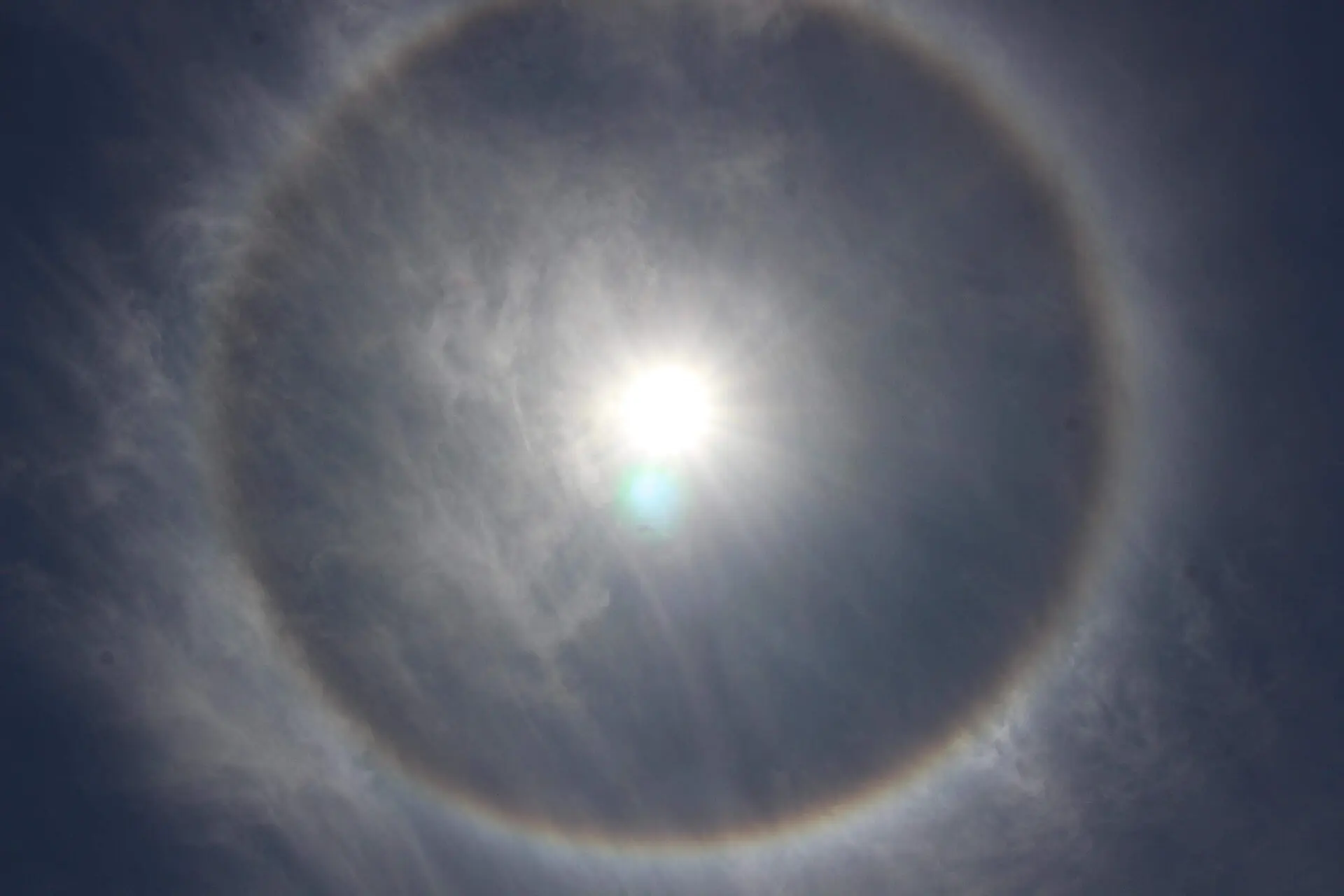
- A veil and a halo. The wisps become cirrostratus, a thin milky veil. The sun still casts sharp shadows, and a ring of light often appears around it. Rain frequently arrives within 12 to 24 hours.
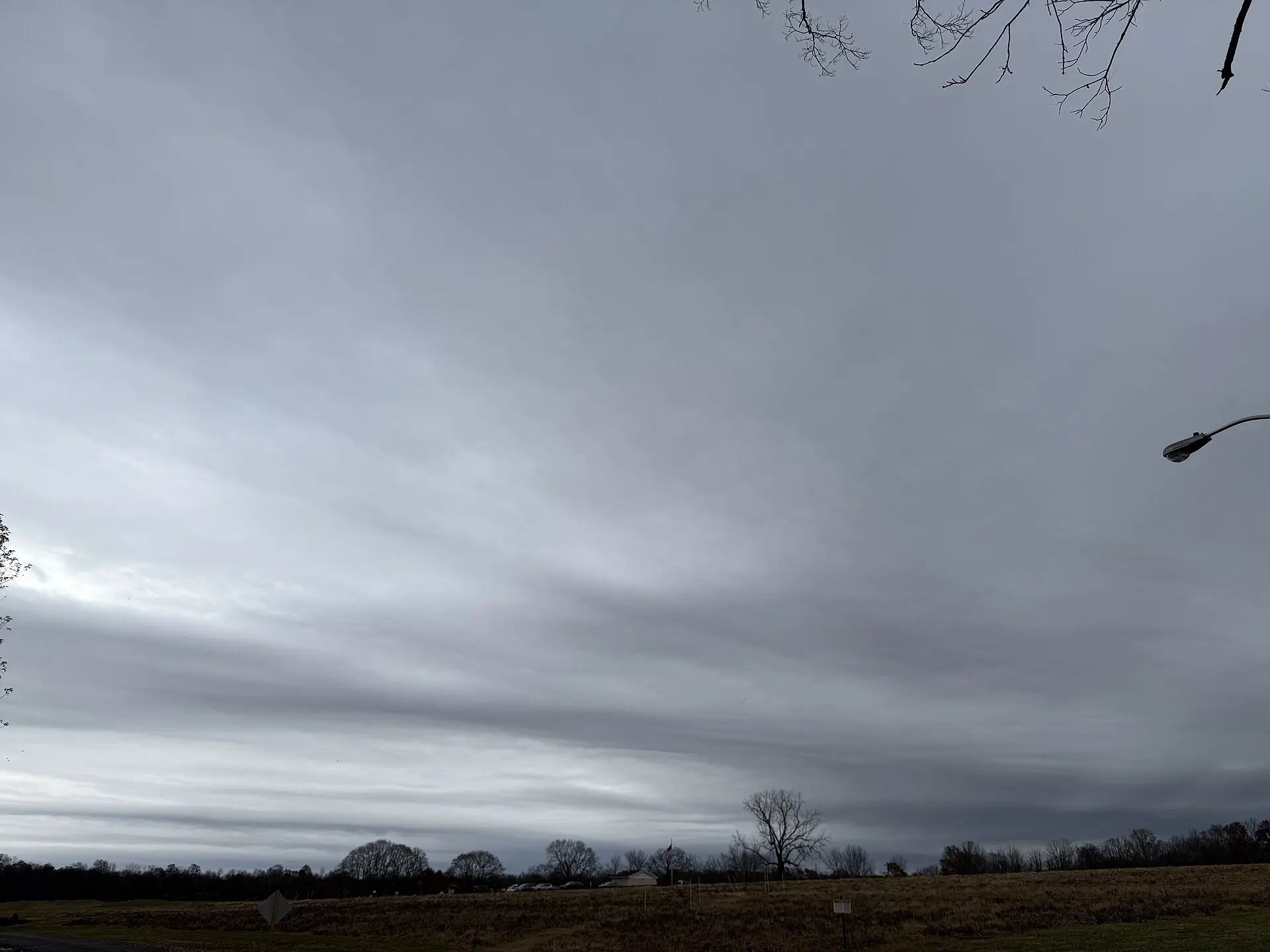
- The sun turns into a smudge. The veil lowers into altostratus. The halo goes, shadows fade, and the sun looks as if seen through frosted glass. Steady rain or snow usually follows within a few hours.
- The sun disappears. The sheet thickens into nimbostratus: dark, shapeless and raining, typically for several hours. It brings no thunder, lightning or hail.
If the veil thins and breaks up instead of lowering, the front is passing to one side and the rain may never arrive. Watch which way it goes.
The growing heap: showers within hours
- Small, flat heaps. Cumulus that is wider than it is tall, with more blue sky than cloud, is fair-weather cumulus.
- Taller than wide. Heaps that keep growing upward through the day show the air is unstable. Showers are likely.
- The top goes soft. When the crisp cauliflower top loses its sharp outline and spreads into an anvil, the cloud has become a cumulonimbus. Expect heavy showers, thunder and lightning, and sometimes hail and violent gusts.
A morning clue for the same kind of day: altocumulus with turret-like tops on a summer morning means the middle of the atmosphere is unstable, and thunderstorms are likely later that day.
If you can hear thunder, the storm is close enough for lightning to reach you. Go indoors or into a car, and stay away from open ground and lone trees.
Six signs that rain is coming
- A halo around the sun or moon.
- The sky turning from blue to milky white as wisps merge into a veil.
- Your shadow fading while the sun is still up: the veil has thickened into a grey sheet.
- The cloud base getting lower and darker hour by hour.
- Heaps growing taller than they are wide before noon.
- Turrets on mid-level clouds on a warm morning.
Grey clouds that usually don’t mean rain
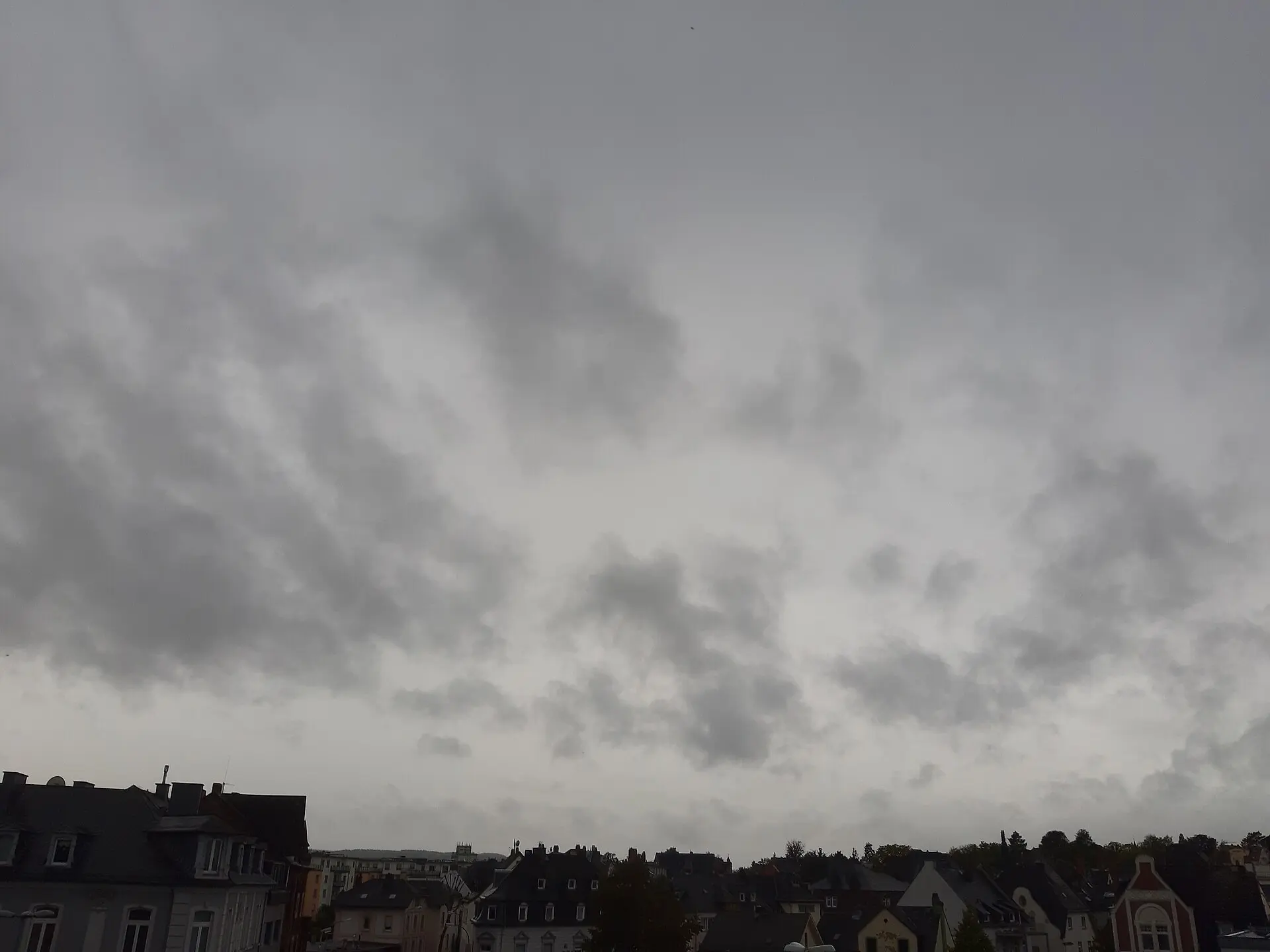
- Stratocumulus: large grey rolls or patches, often covering most of the sky. It looks threatening but produces light drizzle at most.
- Stratus: a flat grey sheet like lifted fog. Drizzle, or nothing at all; morning stratus often dissolves by midday.
- A few cirrus streaks that aren’t increasing: the settled weather is holding.
- Cirrocumulus: a mackerel sky often comes before a change in the weather, but it isn’t a reliable rain sign on its own.
Chart: which cloud, how soon, what kind of rain
| Cloud | What you see | Rain in | What kind |
|---|---|---|---|
| Cirrus | Wisps that keep increasing and merge into a veil | Often 12–24 hours | Steady rain, if the veil goes on thickening |
| Cirrostratus | A milky veil; a halo around the sun or moon | Often 12–24 hours | Steady rain |
| Cirrocumulus | A “mackerel sky” of tiny ripples | A change within about a day | Not a reliable rain sign on its own |
| Altostratus | A grey sheet; the sun turns into a smudge, shadows fade | Usually within a few hours | Steady, prolonged rain or snow |
| Altocumulus | Turret-like tops on a summer morning | Later the same day | Thunderstorms |
| Cumulus | Heaps growing taller than they are wide | Within hours | Showers |
| Cumulonimbus | A tower with a dark base; the top spreads into an anvil | Minutes | Heavy showers, thunder, lightning, sometimes hail |
| Nimbostratus | A dark, shapeless layer; you can’t tell where the sun is | Now | Steady rain or snow for hours |
These are tendencies in temperate latitudes, not a forecast. Fronts stall, swerve and fade. For a plan that depends on the weather, check the forecast as well.
Not sure which cloud you’re looking at? Start with “What cloud is this?”. To learn how these signs play out where you live, write down the cloud and what the weather did next: how to keep a daily cloud journal.
Name the cloud from a photo
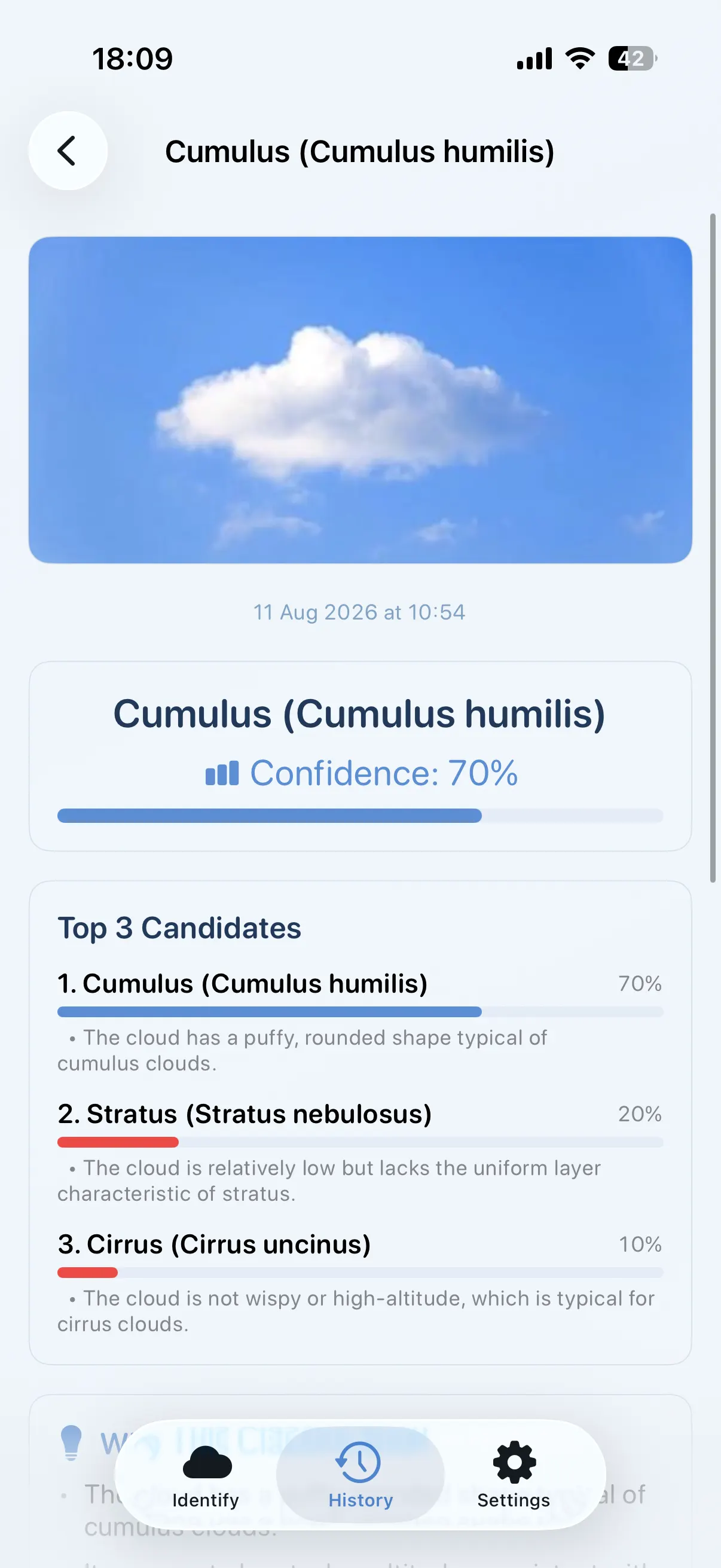
Reading the sky starts with knowing which cloud is overhead, and the look-alikes are the hard part: cirrostratus or altostratus, stratus or nimbostratus. Cloud ID names the cloud from a photo of the sky and shows three ranked candidates with a confidence score and the reason for each, along with weather insights for the cloud it found.
It names what is in the photo. It isn’t a forecast, so pair it with the signs above and watch how the sky changes.
In this real result it called the cloud Cumulus humilis at 70%, the fair-weather kind, with stratus and cirrus as the runners-up. Subscription app: weekly with a free trial when you’re eligible, or annual.