Cirrus
Cirrus are delicate white filaments of ice crystals drawn across the highest part of the troposphere. They are the thinnest clouds in the sky — never dense enough to hide the sun — and their strands are shaped by the wind carrying them.
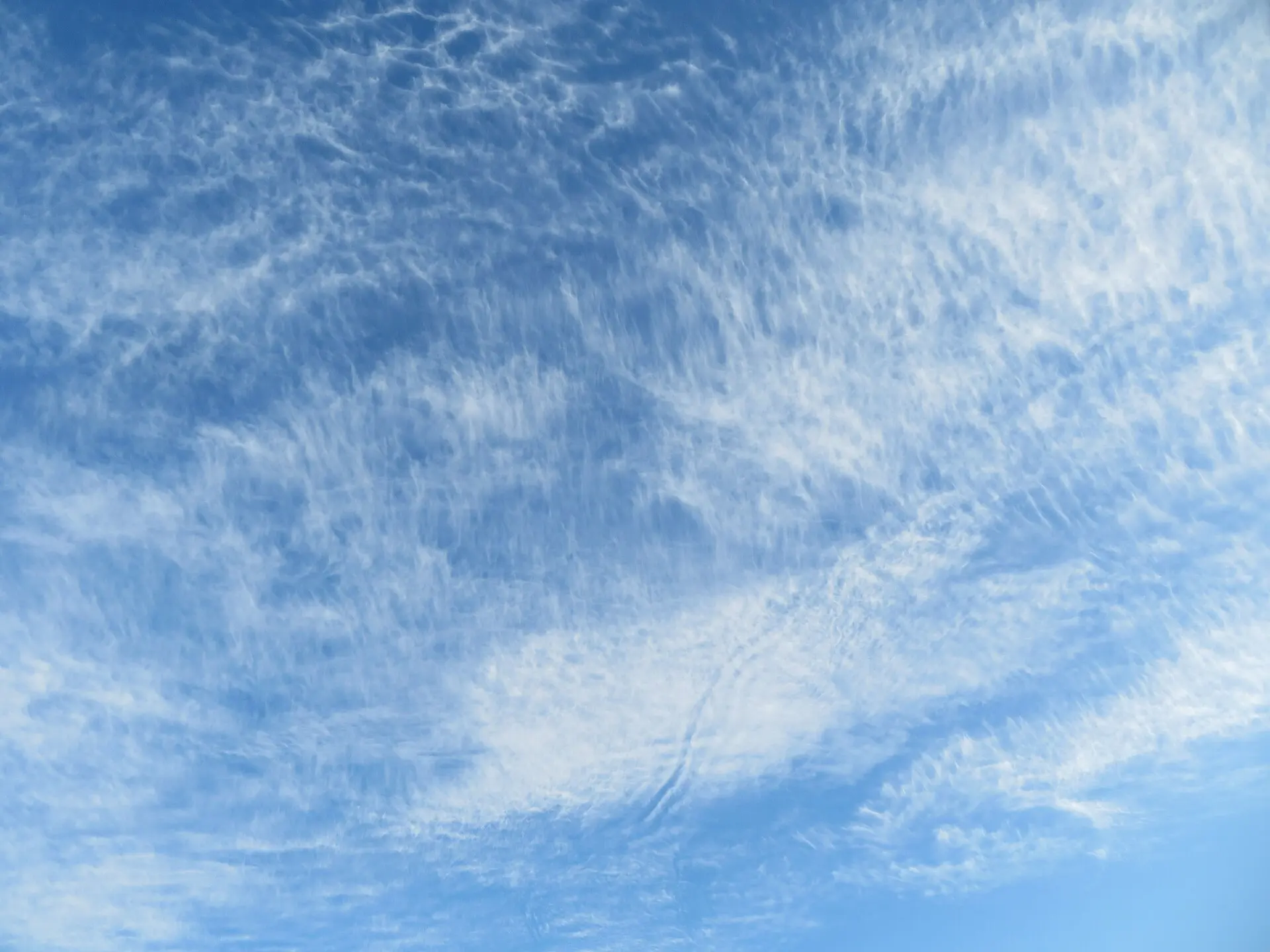
Photo: Sciencia58 / CC0 · Wikimedia Commons
- Typical altitude
- 6,000–12,000 m (20,000–40,000 ft)
- WMO abbreviation
- Ci
- Altitude band
- High clouds
- Also called
- mare’s tails
How to recognise it
- Thin white filaments, patches or narrow bands, always separated by blue sky rather than covering it.
- A fibrous, hair-like texture. The Latin name means "lock of hair", and that is exactly what it looks like.
- Often hooked or comma-shaped at one end — the form called Cirrus uncinus, or "mare's tails".
- No grey shading anywhere. Cirrus is too thin to cast a shadow on itself, so it stays uniformly white.
What weather it signals
- On its own, cirrus signals fair weather. It never produces precipitation that reaches the ground.
- Cirrus that steadily increases, thickens and merges into a milky veil usually marks the leading edge of a warm front — rain often follows within 12 to 24 hours.
- A few isolated cirrus streaks in an otherwise blue sky generally mean the settled weather is holding.
How to photograph it
- Keep the sun off to one side. Backlighting makes the ice strands glow and separates them from the sky.
- Include the horizon or a foreground silhouette — an empty sky gives the eye nothing to judge scale against.
- Late afternoon light reveals the fibrous texture far better than harsh midday sun.
- Underexpose slightly so the bright white filaments keep their detail instead of blowing out.
Fun facts
- Cirrus clouds form in air that is often colder than −40 °C and consist entirely of ice crystals, never water droplets.
- The trailing streaks are ice crystals falling out of the cloud and being bent by winds moving at different speeds — you are effectively looking at a drawing of the wind.
- Aircraft contrails are artificial cirrus. When the air is humid enough they spread out and become almost indistinguishable from the real thing.
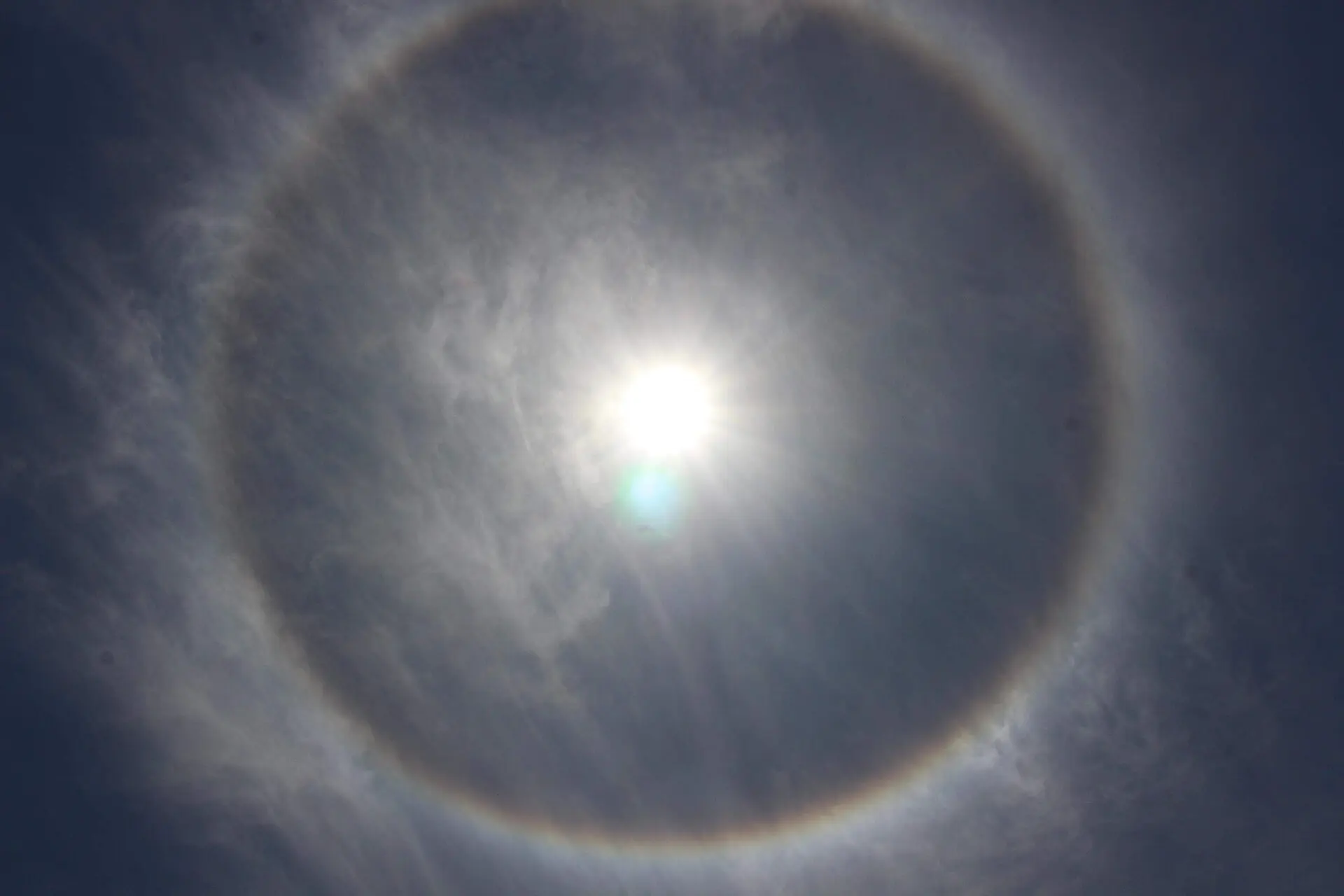
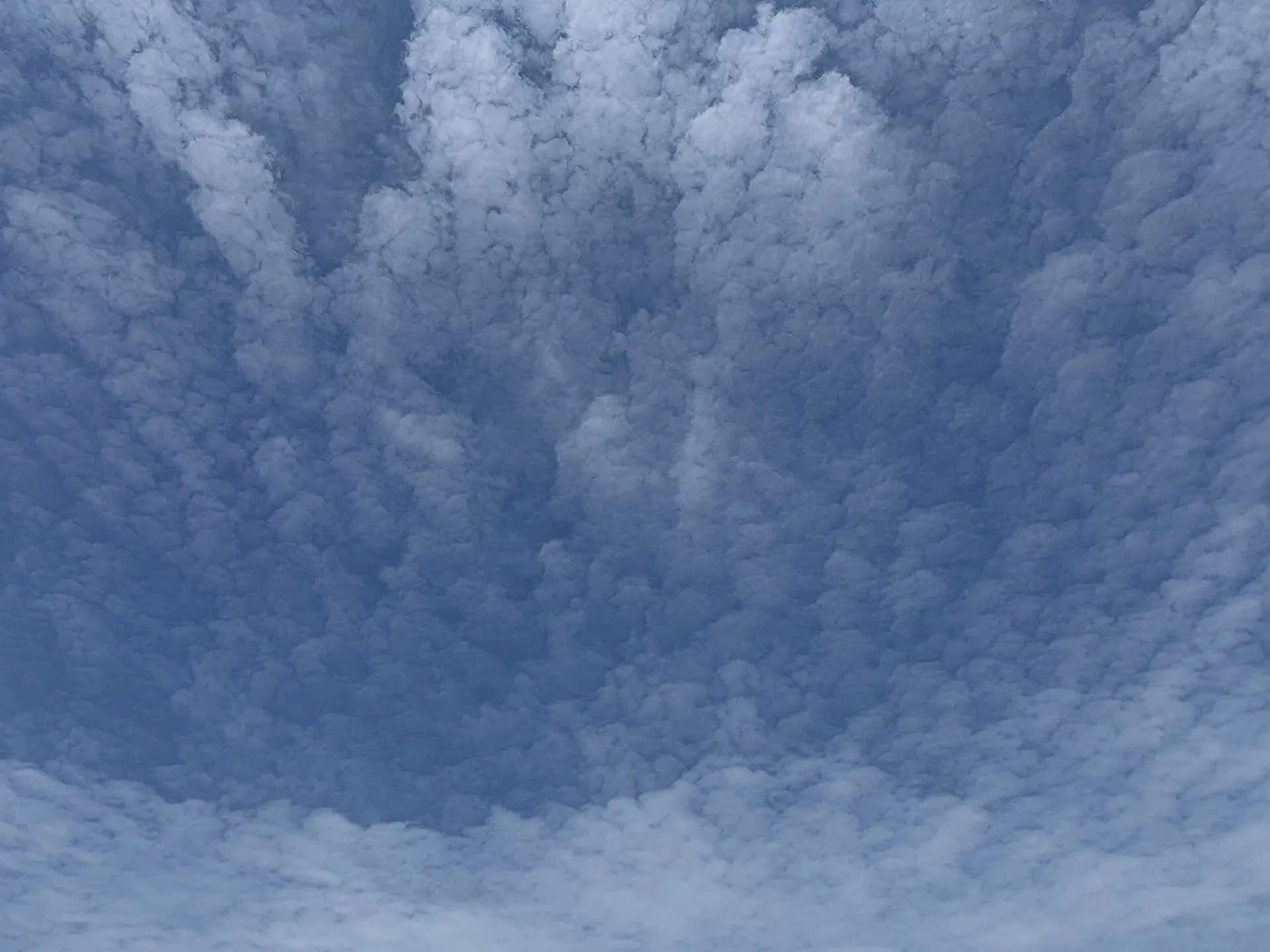
Easily confused with

Frequently asked questions
Do cirrus clouds mean rain is coming?
Not by themselves. A sky with scattered cirrus is usually fair. What matters is the trend: if the cirrus increases over a few hours, thickens, and spreads into a continuous veil, a warm front is likely approaching and rain often arrives within 12 to 24 hours.
What is the difference between cirrus and cirrostratus?
Cirrus appears as separate strands with clear blue sky between them. Cirrostratus is a continuous, near-transparent sheet that covers the sky and typically produces a halo ring around the sun or moon. Cirrus never produces a halo.
How high are cirrus clouds?
Typically 6,000 to 12,000 metres — roughly the cruising altitude of an airliner. They are the highest of the ten cloud genera in temperate latitudes.
Not sure what you are looking at?
Point your iPhone at the sky and let Cloud ID name it for you — with three ranked candidates and the reasoning behind each one.
Download on the App Store