What cloud is this? Name any cloud in three questions
Every cloud belongs to one of ten types (genera) defined by the World Meteorological Organization. You don’t need to memorize them: three questions narrow almost any cloud down to one or two.
1. How high is it?
Clouds form in three layers, and the layer is half the answer.
- Low (below about 2,000 m / 6,500 ft): big, grey and close. They can hide hilltops and tall buildings.
- Middle (about 2,000–7,000 m / 6,500–23,000 ft): smaller-looking and greyish-white. The sun may show through them dimly.
- High (about 6,000–12,000 m / 20,000–40,000 ft): thin, white and made of ice. The sun shines through them.
For clouds made of patches, hold your hand out at arm’s length. Patches wider than three fingers are low (stratocumulus). Patches between one and three fingers wide are middle (altocumulus). Grains narrower than your little finger are high (cirrocumulus).
2. What shape is it?
Cloud names are built from a few Latin words: cumulus means heap, stratus layer, cirrus curl of hair, alto middle and nimbus rain. Match the shape, then add the height from question 1.
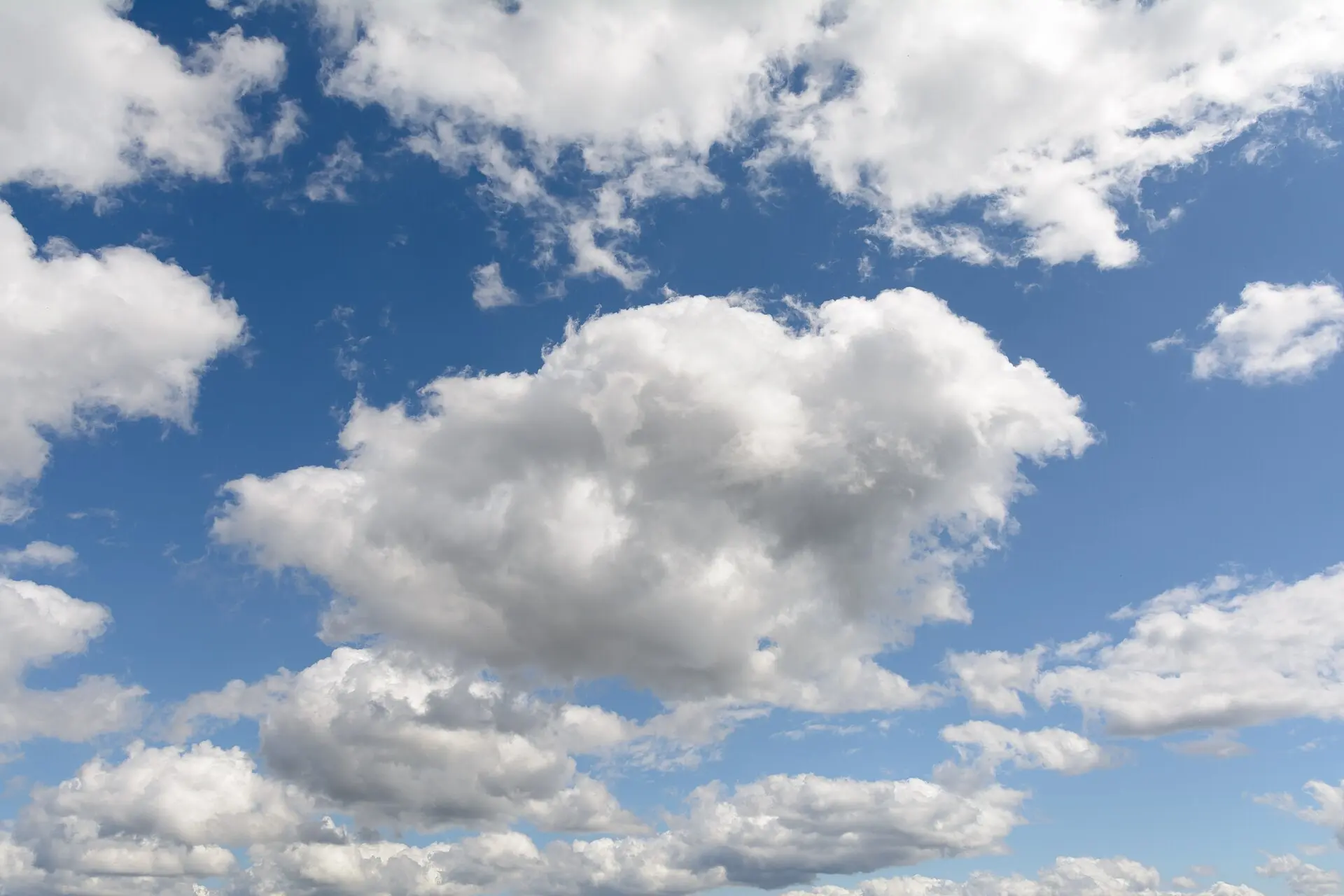



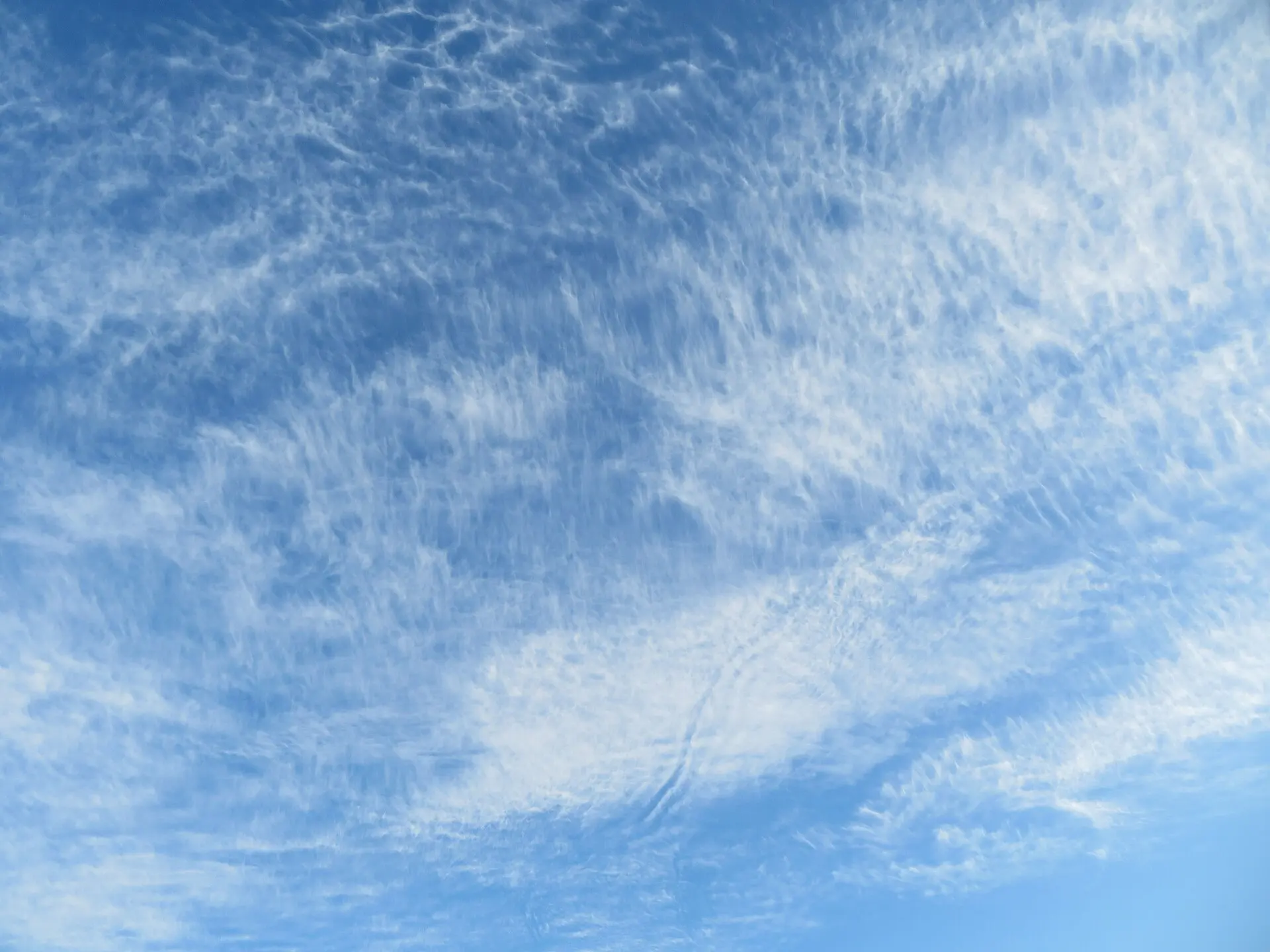

- Heaps are cumulus. If one towers far above the rest with a dark base, it is a cumulonimbus.
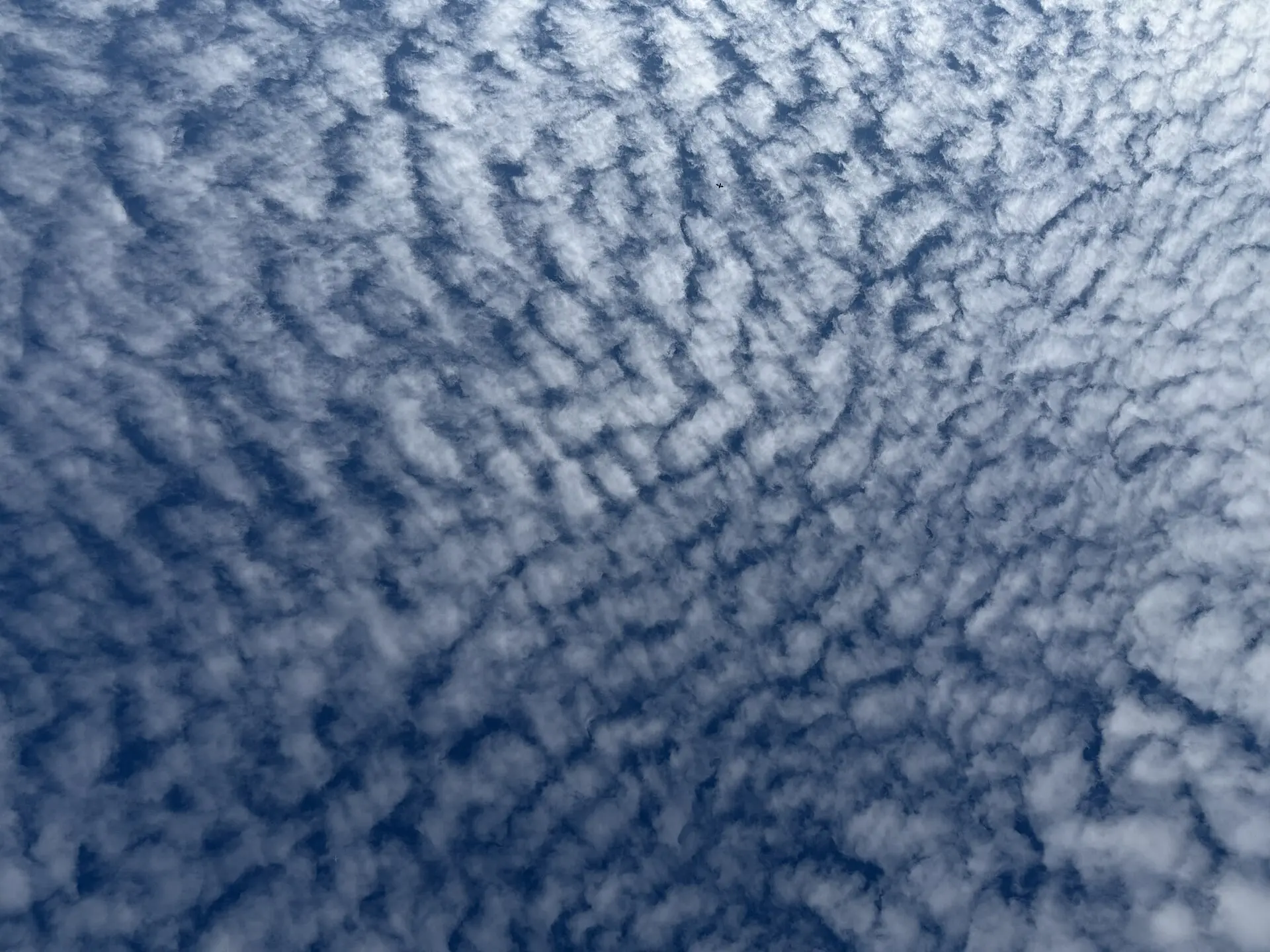
- Patches or rolls are stratocumulus (low), altocumulus (middle) or cirrocumulus (high). Use the hand test above.
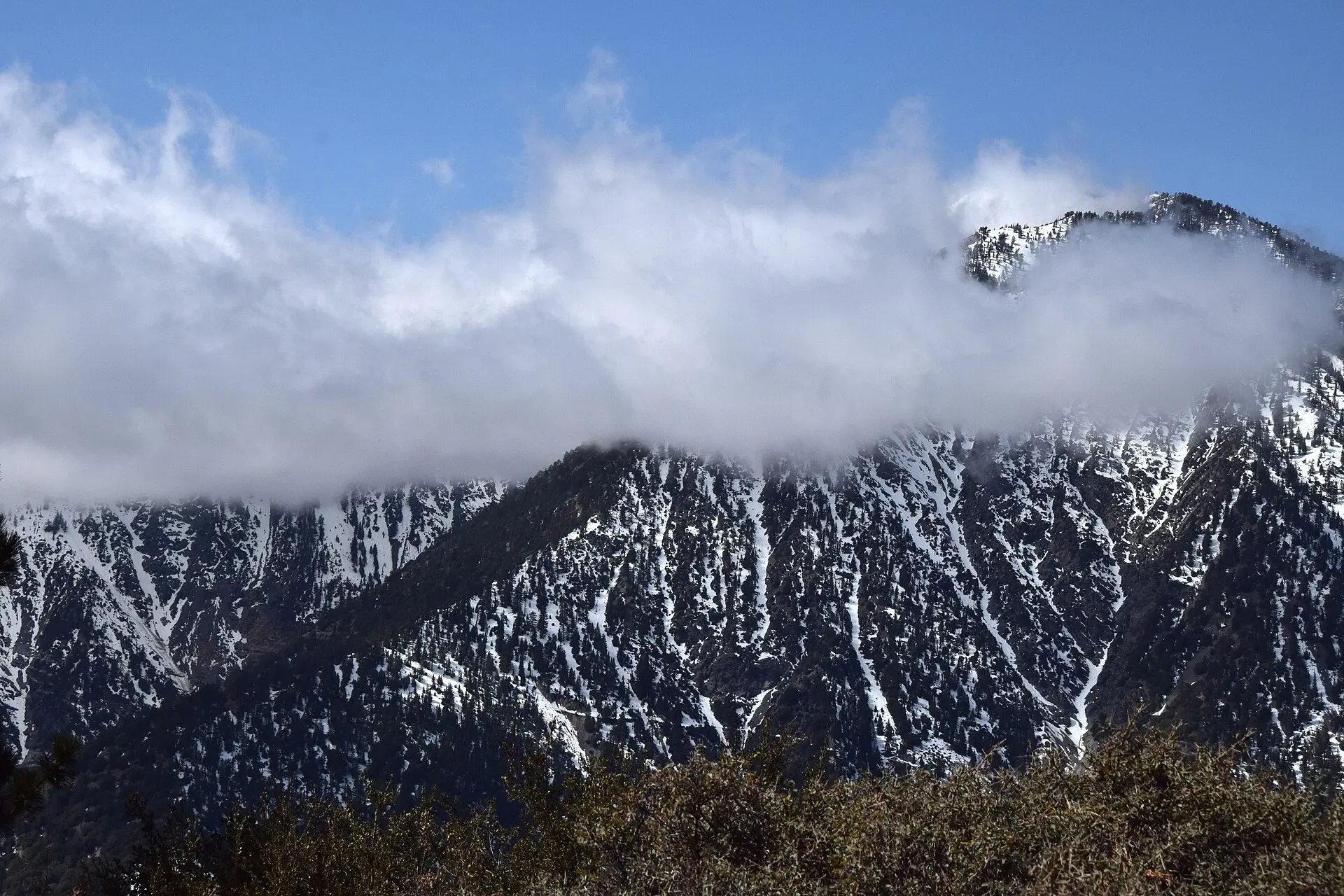
- A sheet is stratus (low and grey), altostratus (middle; the sun looks like a smudge behind frosted glass) or cirrostratus (high; a thin milky veil, often with a halo).
- Wisps are cirrus.
3. Is it raining, or about to?
- Steady rain or snow for hours from a dark, featureless layer: nimbostratus.
- Showers, thunder, lightning or hail from a towering cloud: cumulonimbus.
- Drizzle from a low grey sheet: stratus, or sometimes stratocumulus.
- Nothing falling: any of the others. High clouds never produce rain that reaches the ground.
The ten cloud types at a glance
| Cloud | Height | What it looks like | Weather |
|---|---|---|---|
| Cirrus | High | White wisps, streaks or hooks | Fair; if it thickens into a veil, rain often follows within a day |
| Cirrocumulus | High | Tiny white grains or ripples, no shading | No rain; usually short-lived |
| Cirrostratus | High | A thin, milky veil; often a halo around the sun or moon | Often ahead of a warm front; rain may follow in 12–24 hours |
| Altocumulus | Middle | Grey-white clumps or rolls, with some shading | Usually unchanged; turrets on a summer morning can mean storms later |
| Altostratus | Middle | A grey sheet; the sun looks as if seen through frosted glass | Steady rain or snow often follows within hours |
| Nimbostratus | Low base, very thick | A dark, featureless grey layer; you can’t see where the sun is | Steady rain or snow for hours |
| Stratocumulus | Low | Large grey-white masses or rolls, often with gaps | Mostly dry; light drizzle at most |
| Stratus | Low | A flat grey sheet, like fog that has lifted | Drizzle, or nothing at all |
| Cumulus | Low base, grows upward | Detached puffy heaps with flat bases | Fair; heaps growing taller than they are wide mean showers are likely |
| Cumulonimbus | Low base, extremely tall | A towering cloud with a dark base, often an anvil top | Thunder, lightning, heavy showers, sometimes hail |
Each cloud has its own page with photos, look-alikes and what it means for the weather: see the 10 cloud types.
Want to get faster at naming clouds? Name one a day and write it down: how to keep a daily cloud journal.
Or take a photo
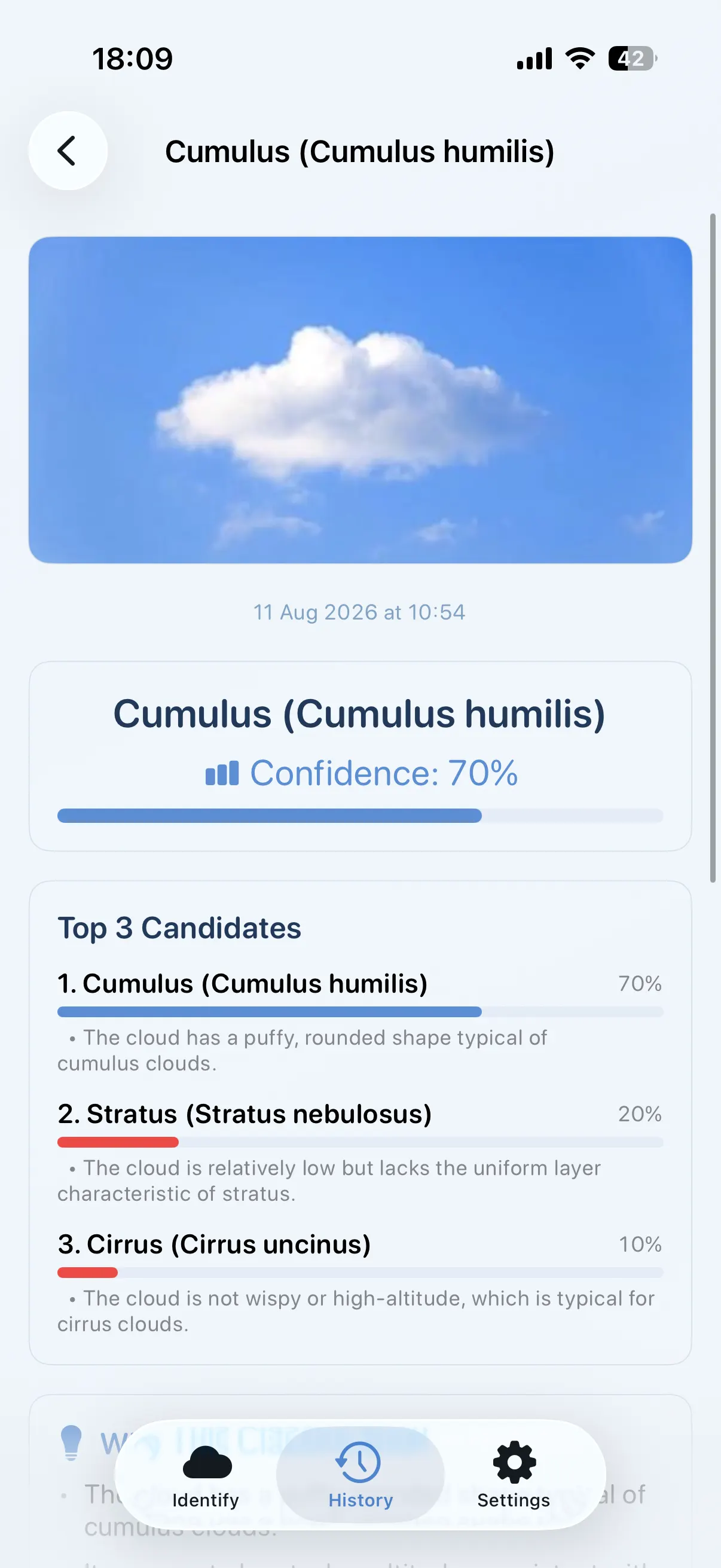
Cloud ID names the cloud from a photo of the sky. Instead of a single answer, it shows three ranked candidates with a confidence score and the reason for each, so you can check its work against the questions above.
In this real result it called the cloud Cumulus humilis at 70%, with stratus and cirrus as the runners-up. Subscription app: weekly with a free trial when you’re eligible, or annual.