Cirrostratus
Cirrostratus is a transparent whitish veil of ice crystals covering all or most of the sky. It is so thin that the sun still casts sharp shadows through it, and it is the cloud responsible for the 22° halo ring.
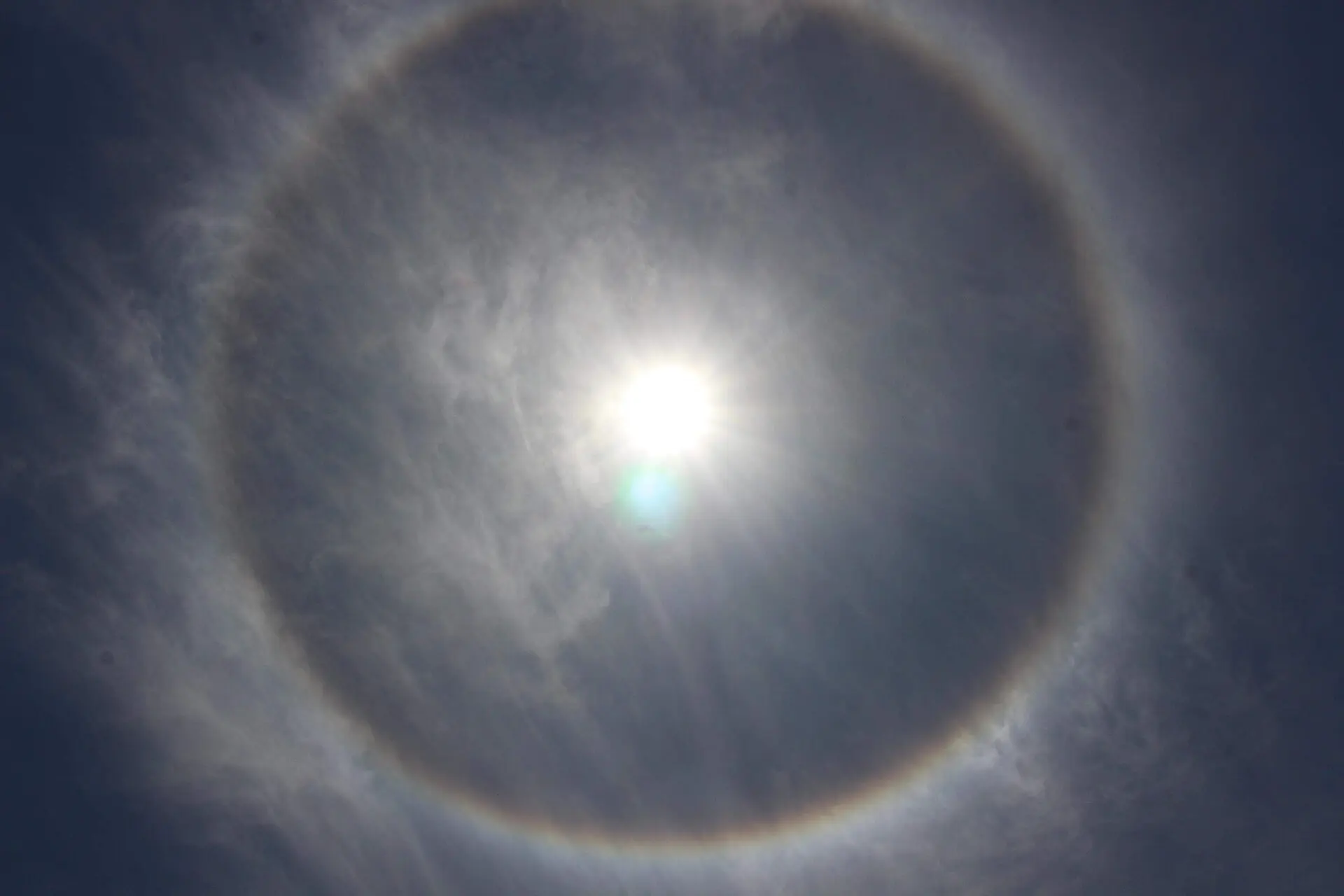
Photo: Bieverwin / CC BY-SA 4.0 · Wikimedia Commons
- Typical altitude
- 6,000–12,000 m (20,000–40,000 ft)
- WMO abbreviation
- Cs
- Altitude band
- High clouds
- Also called
- halo cloud
How to recognise it
- A smooth, milky, almost featureless sheet that gives the sky a washed-out, pale look rather than a blue one.
- The sun or moon remains clearly visible through it, and objects on the ground still cast defined shadows.
- A ring of light — the 22° halo — around the sun or moon. No other cloud produces this consistently.
- It can be so subtle that people miss it entirely and simply describe the day as "hazy".
What weather it signals
- Cirrostratus is the classic sign of an approaching warm front. Rain frequently arrives within 12 to 24 hours.
- The key is what happens next: if the veil lowers and thickens into altostratus, the forecast is reliable. If it thins and breaks up, the front is passing to one side.
- The cloud itself produces no precipitation at the ground.
How to photograph it
- Block the sun itself behind a building, pole or tree. This lets the halo ring appear without the glare destroying the exposure.
- Use a wide angle — the halo is 22 degrees in radius and will not fit into a standard frame.
- Expose for the sky rather than the ground, or the halo will be lost in a bright wash.
Fun facts
- The 22° halo always has exactly that radius, because it is set by the 60° prism angle of hexagonal ice crystals — a fixed property of ice.
- The saying "ring around the moon means rain soon" is one of the few pieces of weather folklore with a solid physical basis.
- Cirrostratus can be thin enough that the only way to notice it is that the sky has lost its depth of blue.
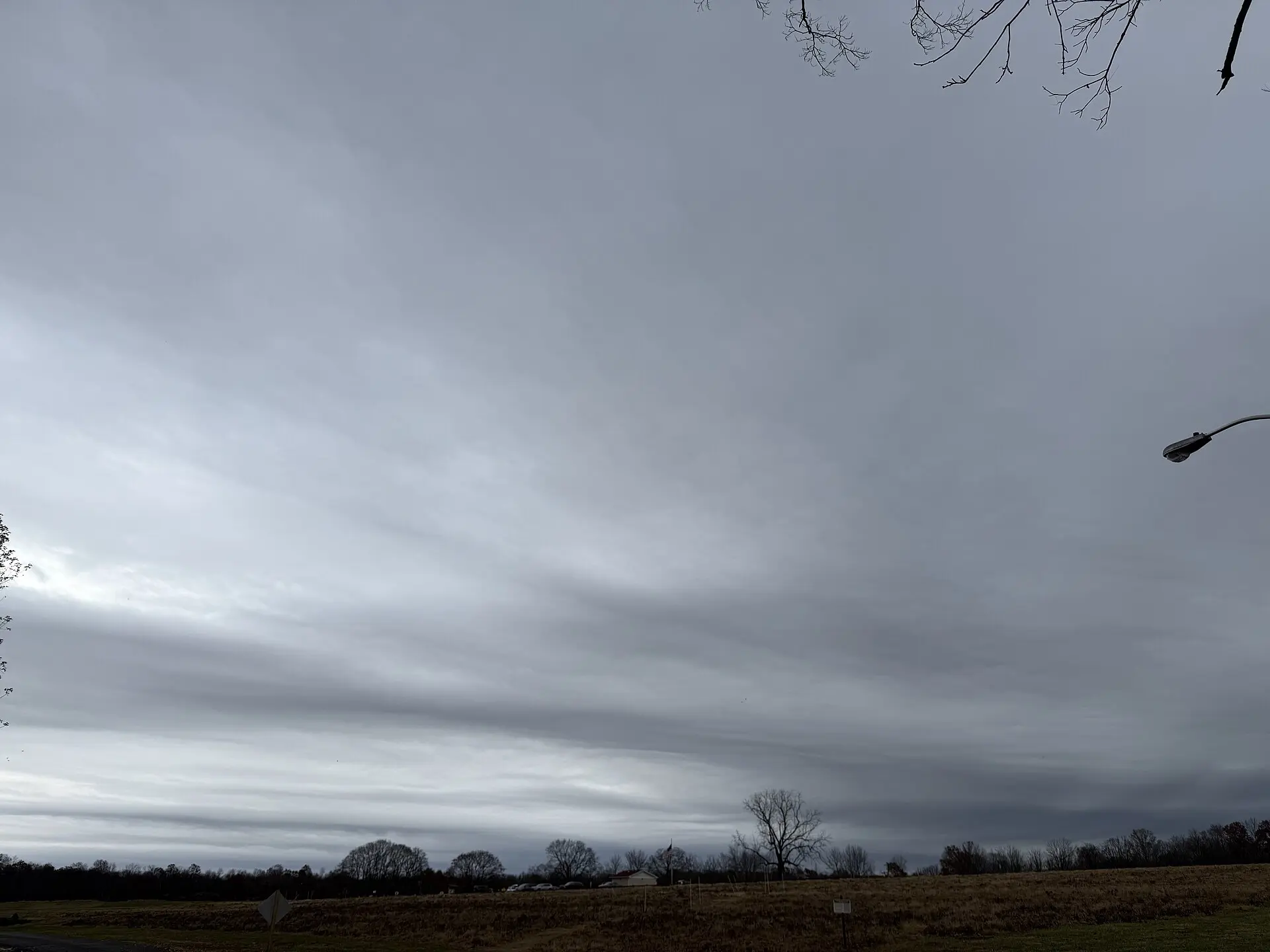
Easily confused with


Frequently asked questions
Does a halo around the sun mean rain?
Often, yes. The halo means cirrostratus is overhead, and cirrostratus typically runs ahead of a warm front. In temperate latitudes rain follows within a day in a majority of cases — but confirm it by watching whether the cloud continues to thicken and lower.
How do I tell cirrostratus from altostratus?
Look at your own shadow. Through cirrostratus the sun still casts a distinct shadow and the disc has a sharp edge. Through altostratus the sun looks as if seen through frosted glass, shadows disappear, and there is no halo.
Is cirrostratus the same as haze?
No. Haze is near the ground and dims the horizon while the zenith stays blue. Cirrostratus is at 6,000 metres or higher, whitens the whole sky including directly overhead, and can produce a halo.
Not sure what you are looking at?
Point your iPhone at the sky and let Cloud ID name it for you — with three ranked candidates and the reasoning behind each one.
Download on the App Store